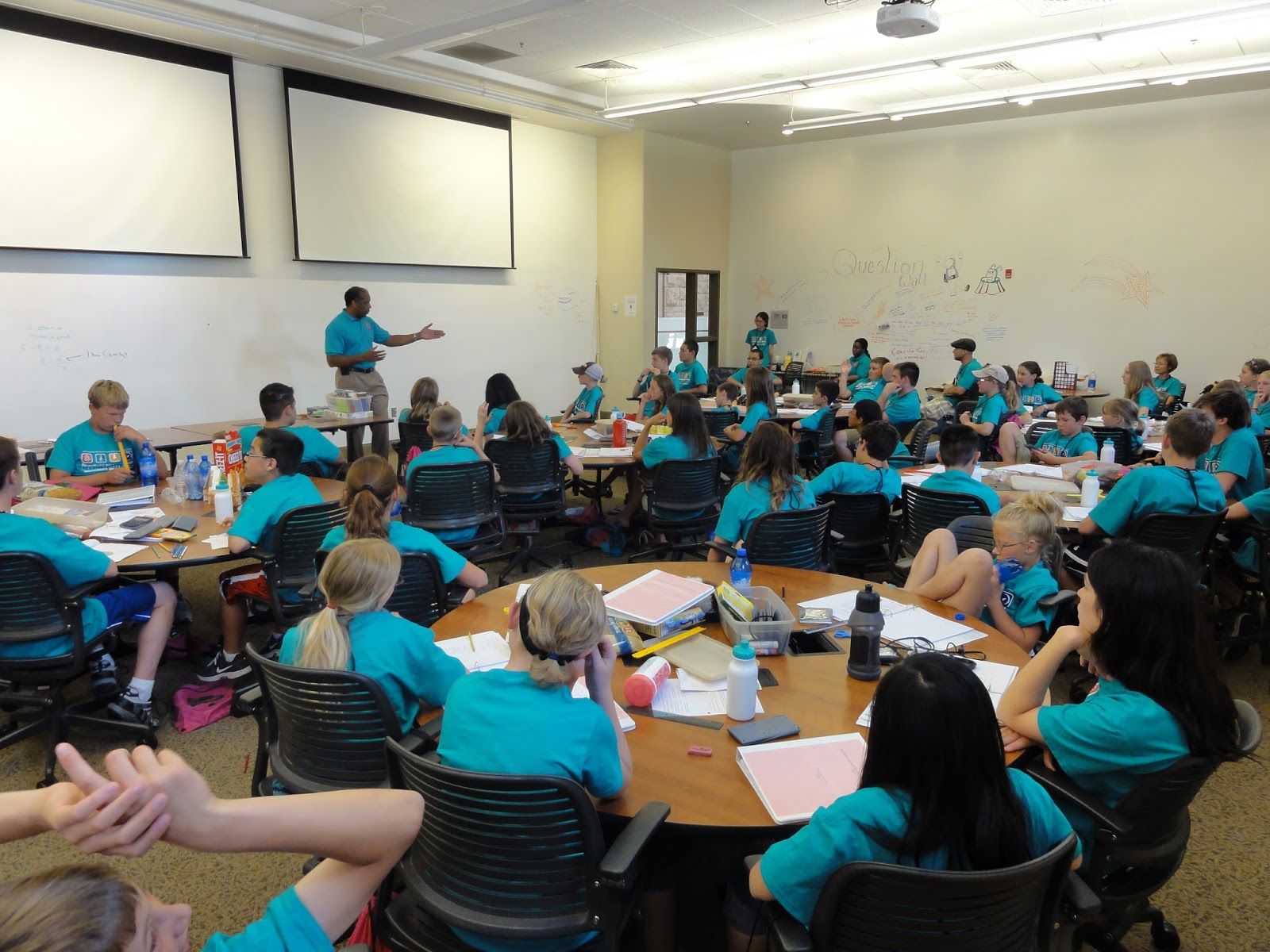
Friday, June 21, 2013

Day 6
Friday 21 June 2013

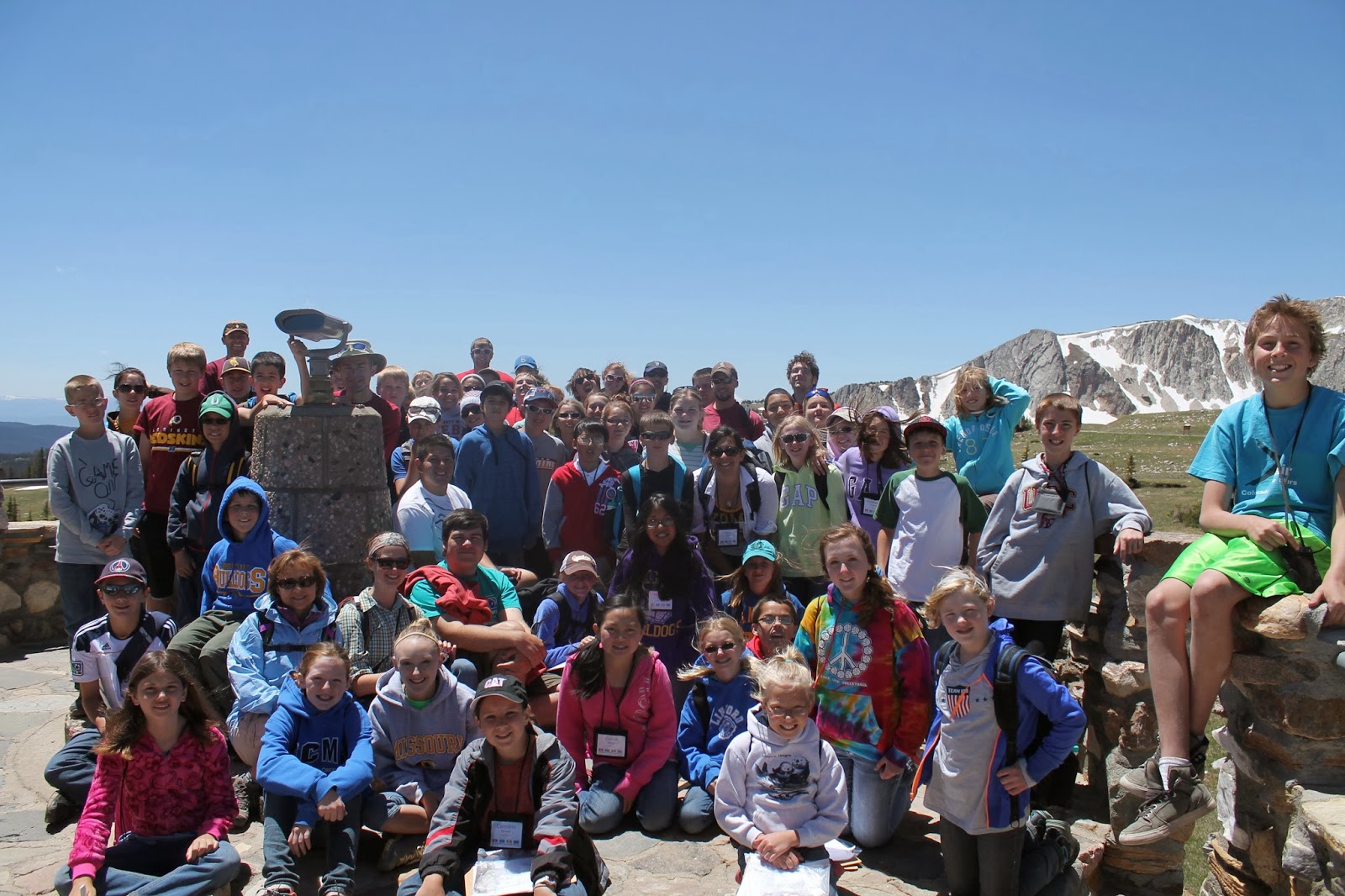
On Friday we spent most of the day up in the Snowy Range in the nearby Medicine Bow National Forest.  One of our goals was to compare the environments at "low" (9000 ft) and "high" (11000 ft) elevations.  For those familiar with the Laramie area, the low elevation hike was on the Little Laramie River trail system, whereas the high elevation walk was near the observation tower at Libby Flats.  Another goal for these hikes was to collect soil and water samples, which would be chemically tested and visually inspected later that night for signs of life.  One additional Friday activity involved interviewing camp directors, counselors, and teachers to learn about college life and potential career paths.



Day 5
Thursday 20 June 2013

On Thursday we started out by dropping our planetary landers (piloted by eggs) from the top of the 50-foot-tall Physical Sciences Building.  I haven't tracked down any photos of the event yet; I will try to post some later today if possible.  My favorite memory is the first drop, where everything went smoothly until just after the landing.  After touch-down the egg pilot apparently hit the ejection button, leading to its unfortunate demise!  The success rate was 8 out of 16 in terms of delivering an egg safely to ground.

Next we spent a couple hours refining our paper rockets and then launching them.  We launched at three different angles: 30, 45, and 60 degrees.  We later analyzed the launch data through graphing and showed that the maximum distance was obtained for launch angles of 45 degrees, confirming our original hypothesis.  After lunch the campers learned more about the challenges to human spaceflight (how to eat, go to the bathroom, how much oxygen is necessary, etc.).  The day finished with preparing for our adventure to the nearby Snowy Range where we will explore different environments and take soil and water samples to be later tested for signs of life.


Thursday, June 20, 2013

Day 4
Wednesday 19 June 2013

On Wednesday we spent a good fraction of the day with Dr. Harris, the former astronaut who heads the Harris Foundation.  He spoke to our campers about his experience in space in addition to encouraging them to follow their dreams.  Along with a materials engineer representative from ExxonMobil (who splits her time between Houston and LaBarge, WY), Dr. Harris helped with an activity testing space suits that the campers designed and constructed using a limited budget.  After lunch the students again faced a limited-budget design challenge, this time for planetary landers.  Tomorrow you'll see pictures from our Day 5 planetary lander egg drop contest.  We spent some time searching for potentially habitable areas on Mars using Google Mars (similar to Google Earth but using Mars maps), and then learned how to use professional astronomical databases to choose a nearby star system for their research project.  The day was capped off by using our 26-inch telescope at Red Buttes Observatory south of town to image their chosen star systems.  Some of the fun pictures below show the students twirling glow sticks outside the observatory.


Wednesday, June 19, 2013

Day 3
Tuesday 18 June 2013

On Tuesday morning our space colonizers searched for suitable habitats at the popular Vedauwoo location in the nearby Medicine Bow National Forest.  After lunch we learned how to compute the height of a building using just a stopwatch, a (dropped) watermelon, and a theoretical physics calculation.  This was followed by learning how to design and build (paper) rockets.  In the evening we learned about how earth and the universe have changed over cosmic times, and how stars evolve during their long lifetimes.